Cultivating a Safe, Supportive Environment
I am a Grade 1 teacher, 4 years in a row now, and my little Maria approaches my desk much earlier than students should be arriving in the cold dark winter mornings.
I don’t scold, don’t send her back outside, just kneel next to her.
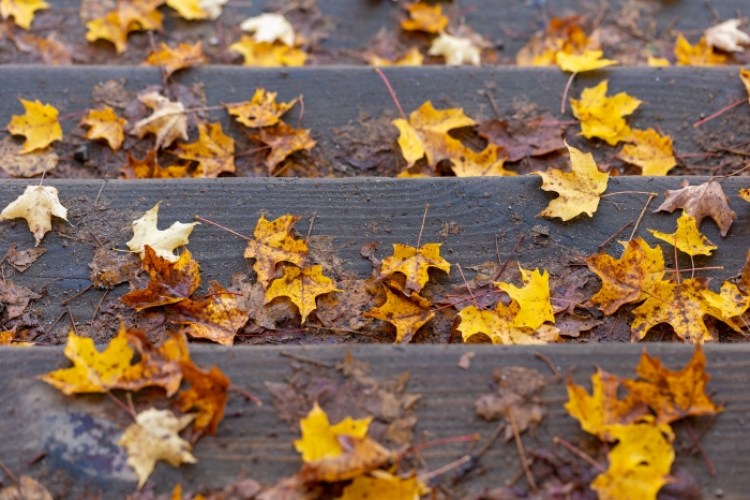
“Leaf crumbs,” she whispers, as she shuts her fingers into fist, around Autumn itself, and only shreds of dead leaf dusted out.
I smiled.
Leaf crumbs.
If life were leaf crumbs between fists of fury and all that was left of the life we lived were shreds and dust named Beauty, wouldn’t that be accomplishment enough? If all that we did was so full of life... so full of proof of our Maker.
If everything I looked at I’d look at it from down low, knees to the cold floor, hands clasping Autumn gold with magnifying glass to nose,
Wondering.
All the while wondering,
Awe-fully wondering and naming beauty we find.
How did this beauty of a thing die and why was its life so short and how is there so much beauty in the death of this thing and why such crunch from something that was once so soft, so flimsy?
If only ‘leaf crumbs’ were just the beginning of how I’d perceive life—like the way she calls her mini mitts “finger jackets” and that stack of books “Imagination Mountain” and all those window smudges “nose art.” If only those were the eyes we’d all see life through.
I wrote the excerpt above over a decade ago as I was finding my way as an elementary teacher. It was a reflection of the space I was working so hard to create: a space of safety, of understanding behavior as communication, of wonder.
This little girl had been placed in foster care at 6 months old, jumped houses 11 times before she landed in my class, and arrived each day appearing dishevelled, unprepared, and off task. Her invisible backpack of stress weighed her little body down so much so that she walked hunched over. She was the beginning of my journey in understanding behavior. I refused to participate in a system that kept record of my students’ wrongs and penalized them for the “hand of cards they’d been dealt” or to punish them for small behavior challenges that could have been prevented had I been curious enough.
As the years went on and I switched roles, schools, classrooms, I noticed a few of the same patterns every year:
- Children everywhere are just children. They have developing brains and soft hearts, as they should. I can’t keep expecting them to behave like skilled adults.
- All children carry invisible backpacks full of stressors that contribute to behaviors I so easily confused with misbehaviors.
- Children, like all humans, need belonging, independence, mastery and generosity.
I began to wonder if maybe compliance was not the overall goal in my classroom. I began to shift my perspective of my role of “Teacher” to “Facilitator of Connections,” “Cultivator of Creativity,” “Co-regulator of Safety” in order for children to become all that God intends.
I started studying the Circle of Courage, a holistic and strengths-based model developed to support the whole child and understand behavior.[1] I dove into Stuart Shanker’s Self-Reg research,[2] embracing the philosophy I had been desperate to articulate for so long: behavior is communication, and misbehavior is usually stress behavior, inaccurately labeled.
Practically, over the years, this research has shaped both my approach and my posture. In every moment, I sought to build into students’ needs of belonging, mastery, independence, and generosity proactively. If one of those areas was lacking in one student, I would notice stress behaviors immediately. I began to see how quickly their posture shifted when mine did. Here are some ways I’ve incorporated this research:
- Belonging: I met and greeted every student by name as they entered my classroom. We humans feel immediate belonging when we hear our names spill out from a positive voice, welcomed into a community we cooperatively create.
- Generosity and Belonging: During our intentional “Morning Meeting” and Attendance time, we sat in a circle, on the floor or in chairs, facing each other. We practiced greeting each other by name to create belonging amongst our peers. Sometimes we played a game; sometimes we shared our hearts. Attendance questions were always strategic: “Today, when I say your name, tell me what you had for breakfast today. If you did not have breakfast, I want you to say the code word COCONUT.” It was an immediate temperature check: Which of my students will be hungry? Which of my students ate chocolate for breakfast? Which of my students prepared themselves breakfast and got themselves to school? It was also a friendly, shame-free way of not singling out children who missed a meal. It allowed me to proactively identify who needed what before we began learning content.
- Independence: I taught students metacognition, that is, thinking about our thinking. I began teaching my students about the 5 Domains of Stressors, by Stuart Shanker.[3] Together we studied all the areas that zap our energy all day every day. We learned to identify when we felt like we were in the “yellow zone” (excited, nervous, scared), “blue zone” (sad, sick, tired), etc. We studied each other’s’ body language and used our
 Morning Meeting time to predict how others felt based on their body language. We learned to check in with ourselves and with each other (“Do you feel excited? Your hands are clapping!” “Do you feel sad today? Your shoulders look droopy.”)
- Mastery: We engaged in problem solving together, always. Recess issues were never swept under the rug. Responses did not include “you should have talked to the gym teacher if you had a problem in gym.” A teacher becomes students’ safe place, their trusted adult, and it is key to work hard to maintain that. We used after-recess tattling to come together in our class circle and hear each other out. We listened to each other, we presented new solutions, we role played, and we brought restitution to the problem together. I realized that this was not extra work, this was important work.
- Belonging: I played with them – I engaged in centers with them when I could, I went out for recess for them as I had capacity, I told them jokes and laughed at theirs. Joy is often overlooked in the classroom.
By meeting their needs proactively and setting up the physical classroom space to support this, I noticed a significant decrease in stress behaviors. When stress behaviors did arise, and I accidently labeled them as misbehaviors, I checked in with myself. I took a deep breath and knelt down next to the student and worked towards coregulation and curiosity. I began to wonder “Why this behavior? And why now?” I stopped expecting students to be kind 100% of the time and sit still even 50% of the time. I reminded myself that we were created for community, for creation, for dancing and singing and playing and exploring together.
Over the years I have moved from the classroom to Special Education to administrative roles to a regional role for Latin America. No matter what my title is, I continue to scribble poems all over the place, grabbing small moments and marking them as a reference point of growth. May we not lose sight of moments of beauty like “Leaf Crumbs,” that can so easily be dismissed when our tunnel vision is titled Compliance.
People are just as wonderful as sunsets if I can let them be…
When I look at a sunset … I don’t find myself saying,
“Soften the orange a little on the right hand corner…”
I don’t try to control a sunset. I watch it with awe as it unfolds.
– Carl Rogers[4]
I am starting to learn to bring others along with me on this journey, reframing life around us with a posture of curiosity, safety, and empowerment. I invite you to join me on this collaborative process of proactively meeting each other’s needs by tending to each other’s hearts, as we are filled with the Holy Spirit to celebrate Leaf Crumbs.
Lisa Wiebe
Lisa serves as TeachBeyond’s Associate Regional Director for Formal Education in Latin America. She is a Canadian raised in Bolivia as a third culture kid and now lives with her family in the Dominican Republic. Lisa has taught at the primary level (grades 1-4 and bilingual kindergarten) and has also been a resource teacher, teacher coach, and assistant teacher supervisor. In addition, she has overseen individualized programming for students with disabilities. Her postbaccalaureate studies focused on inclusion and trauma informed practice. Lisa is passionate about education and appreciates the little ones who slow her down in her day-to-day life, reminding her of wonder, curiosity, and the beauty of small moments.
[1] Brendtro, L. K., Brokenleg, M., & Van Bockern, S. (2019). Reclaiming youth at risk: Futures of promise. Solution Tree.
[2] Shanker, S., & Hopkins, S. (2021). Self-reg schools: A handbook for educators. Pearson.
[3] Ibid.
[4] Rogers, C. R. (1980.) A way of being. Houghton Mifflin Company. Italics added; emphasis on “try” in original.
Photo Credits
Autumn Leaves. Freenaturestock. Resized.
Teacher with College Students. Shutterstock. Resized.
Related Stories